Morocco Travel Itinerary 7 Days: Marrakech to Fes Guide
Seven days is the sweet spot for a first loop through Morocco: enough time to pair the imperial cities with a real night in the Sahara Desert, without spending your whole trip in transit. This Morocco travel itinerary 7 days route runs from Marrakech, over the High Atlas Mountains, into the dunes of Merzouga, and finishes in the ancient medina of Fes.
Whether you are searching for 7 days in Morocco, a ready-made Morocco itinerary, or simply a realistic Morocco travel plan for 1 week in Morocco, this guide covers exactly what to see, where to stay, how long each leg takes, and how to adapt the route for families, couples, and different budgets.
Morocco Travel Itinerary 7 Days at a Glance
- Day 1: Arrive in Marrakech, explore Jemaa el-Fnaa
- Day 2: Marrakech palaces, gardens, and souks
- Day 3: Cross the Atlas to Ait Ben Haddou and Ouarzazate
- Day 4: Dades Valley to the Sahara Desert (Merzouga)
- Day 5: Sunrise in the Sahara, then on to Dades Valley / Midelt
- Day 6: Drive to Fes via the Middle Atlas
- Day 7: Explore Fes el Bali and depart
Day 1: Marrakech
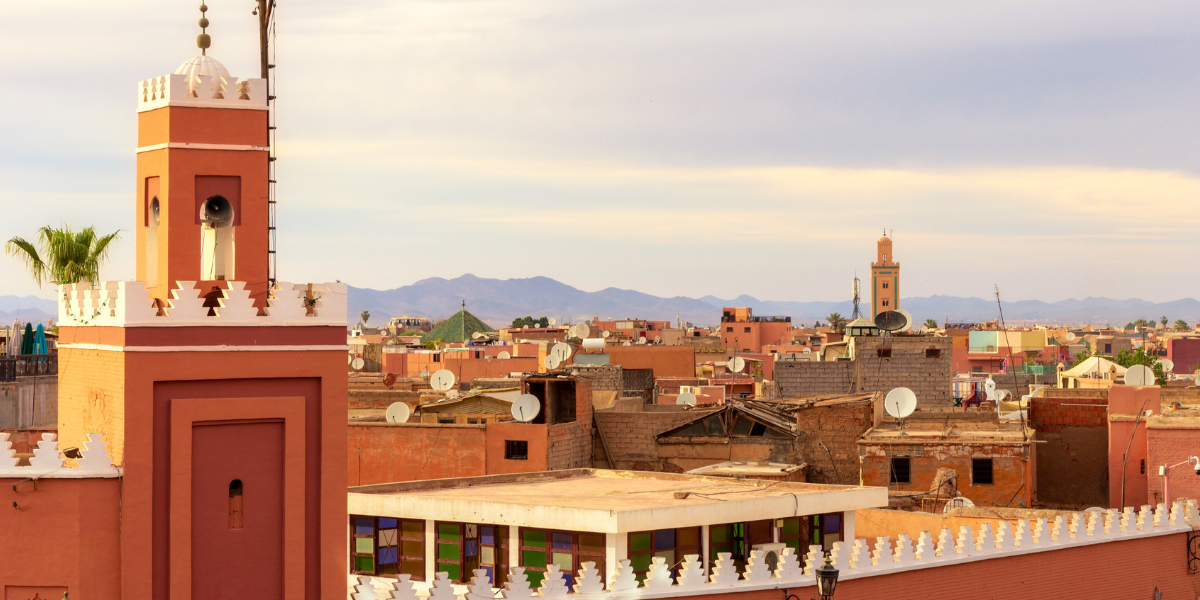
Most international flights land at Marrakech Menara Airport, roughly 20 to 30 minutes from the medina. Check into a riad and spend the afternoon wandering toward Jemaa el-Fnaa, the main square, and the nearby souks. Climb a rooftop café for a first view over the square before it fills with food stalls, storytellers, and musicians at dusk.
Suggested activities: orientation walk through the medina, Koutoubia Mosque exterior, sunset from a rooftop terrace.
Food: your first Moroccan tagine at a medina restaurant, or a plate of grilled skewers from the Jemaa el-Fnaa food stalls.
Accommodation: a traditional riad inside the medina, for the full first-night atmosphere.
Practical tip: arrange your desert transport (driver or small-group tour) for Day 3 before you arrive, since good operators book up in high season.
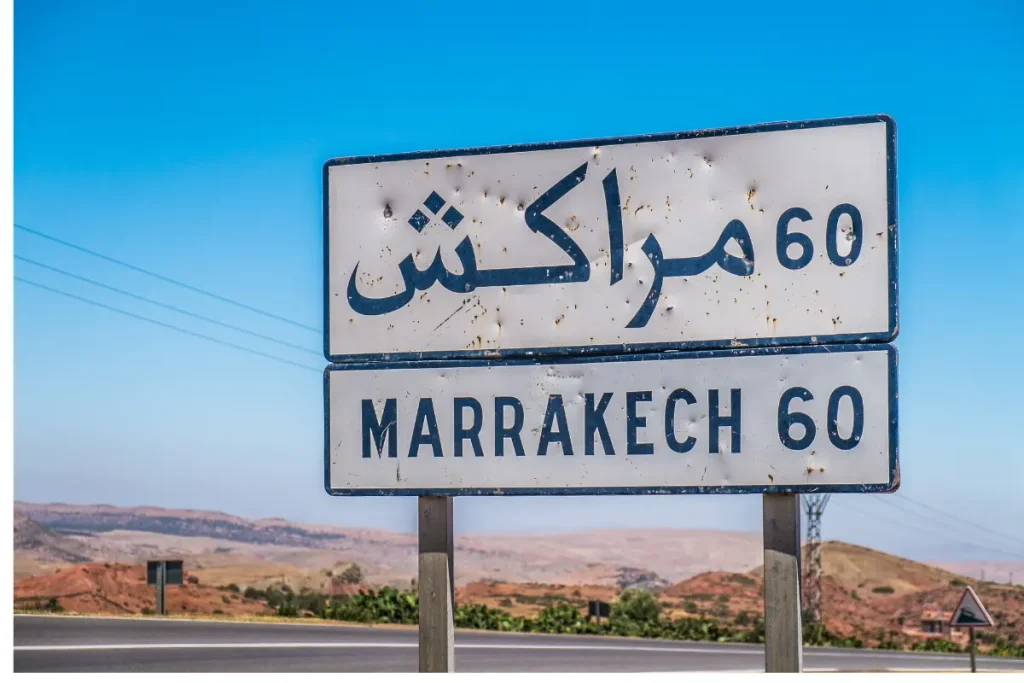
Day 2: Marrakech
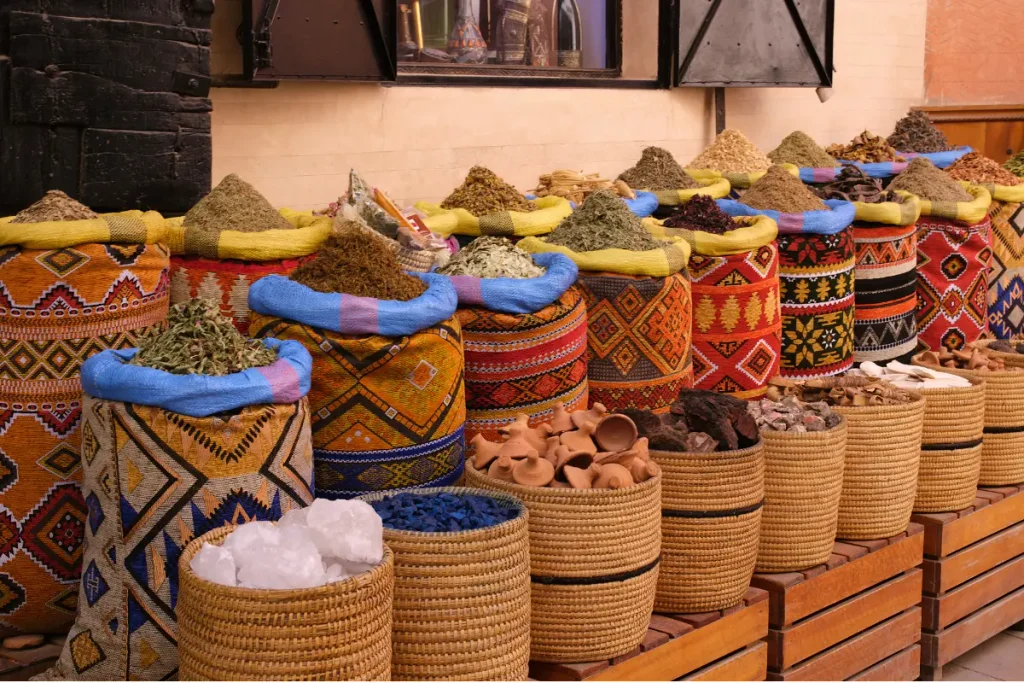
Spend the morning at the Bahia Palace and the Saadian Tombs, then walk to the Majorelle Garden for its cobalt-blue villa and cactus garden. In the afternoon, dive into the souks for leather, lamps, and spices, then unwind with a traditional hammam before dinner.
Suggested activities: Bahia Palace, Majorelle Garden, souk shopping, hammam and spa.
Food: couscous, traditionally a Friday dish, or a saffron-infused tagine.
Accommodation: same riad as Day 1.
Practical tip: agree on prices before any purchase or service in the souks; polite bargaining is expected.
Day 3: Ait Ben Haddou / Ouarzazate
Leave Marrakech early for the roughly 185 to 190 km (3.5 to 4 hour) drive over the Tizi n’Tichka Pass, the highest paved mountain pass in North Africa at around 2,260 meters. The road winds through Berber villages and terraced valleys before descending toward the pre-Saharan south.
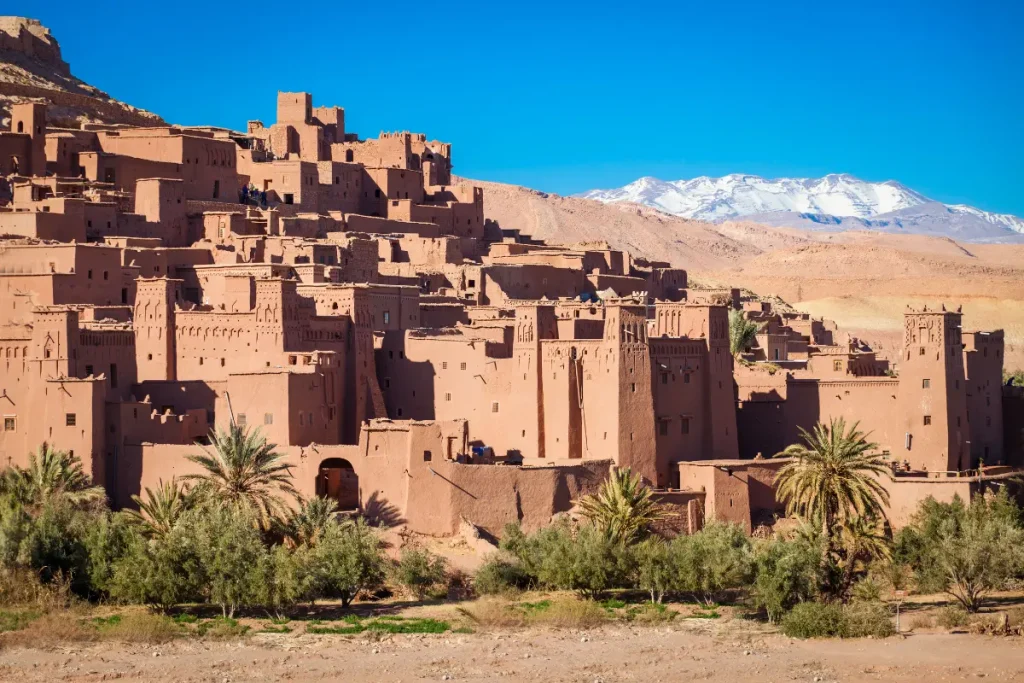
Your first stop is Ait Ben Haddou, a UNESCO World Heritage fortified village (ksar) that has appeared in numerous films and TV series. Explore the earthen alleyways and climb to the hilltop granary for panoramic views. Continue roughly 30 minutes to Ouarzazate, Morocco’s film capital, where you can visit the Atlas Film Studios and the Taourirt Kasbah.
Suggested activities: Ait Ben Haddou ksar walk, Atlas Film Studios, Taourirt Kasbah.
Food: a simple tagine lunch at a terrace overlooking the ksar.
Accommodation: a guesthouse or kasbah-style hotel in Ouarzazate.
Practical tip: the pass can close briefly for snow between November and March, so build in flexibility if traveling in winter.
Day 4: Sahara Desert
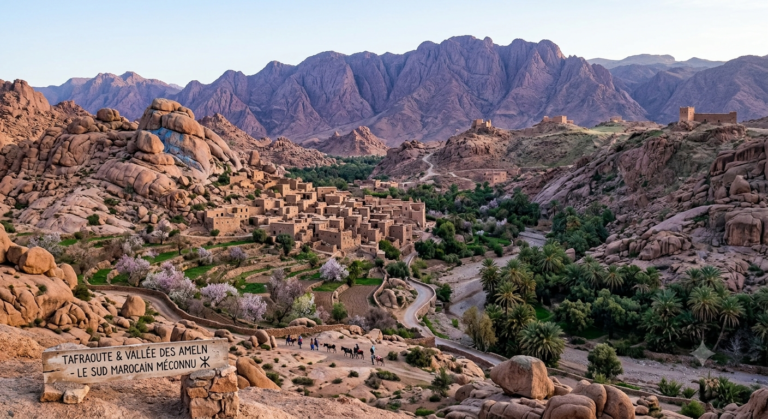
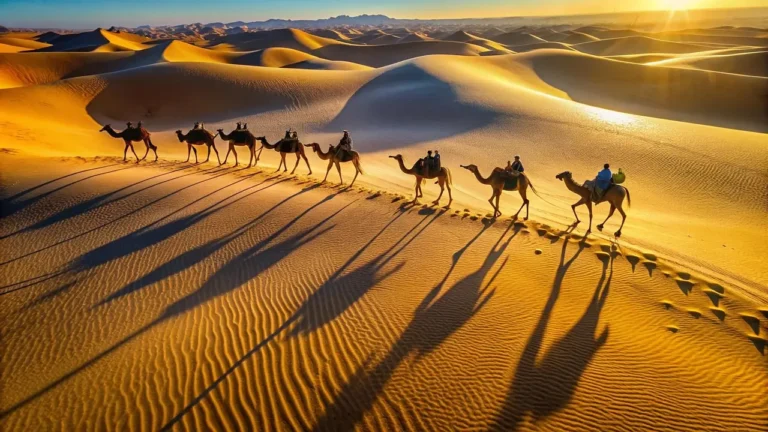
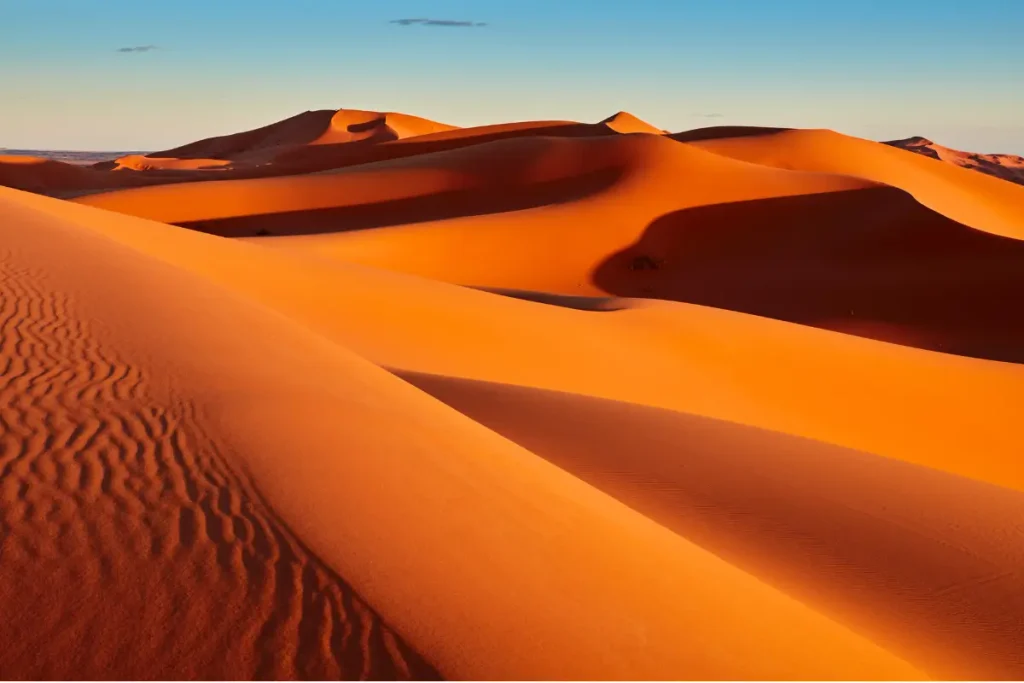
From Ouarzazate, the road continues through the Dades Valley and the dramatic Todra Gorge, where sheer rock walls rise up to 300 meters above a narrow river canyon, before reaching Merzouga and the dunes of Erg Chebbi (roughly 6 to 7 hours total driving, with stops). Leave your vehicle at the edge of the dunes and continue by camel to your desert camp in time for sunset.
Suggested activities: Todra Gorge photo stop, camel trek into Erg Chebbi, sunset over the dunes, Berber music around the campfire.
Food: a Berber-style tagine dinner cooked at the desert camp.
Accommodation: an overnight desert camp (bivouac), from simple shared tents to private luxury tents with en-suite bathrooms.
Practical tip: desert nights are cold even in summer, pack a warm layer regardless of season.
Day 5: Sahara Desert / Dades Valley
Wake before dawn (around 5:30 to 6 am) for sunrise over the dunes, then ride back to the hotel for a shower and breakfast. Spend the rest of the day driving back through the Dades Valley, known as the Road of a Thousand Kasbahs, stopping for photos at the valley’s famous rock formations. Overnight in the Dades Valley or continue toward Midelt to shorten the following day’s drive.
Suggested activities: sunrise over Erg Chebbi, short walk or drive through the Dades Gorges, optional stop in a Berber village.
Food: mint tea and fresh bread at a roadside stop in the Dades Valley.
Accommodation: a valley guesthouse in Dades or Boumalne Dades, or a hotel in Midelt.
Practical tip: carry cash, small towns along this stretch have limited ATM access.
Day 6: Fes
Continue north through the Middle Atlas, passing Ifrane, known for its alpine-style architecture, and the cedar forests around Azrou, home to Barbary macaques. The full drive from the Dades Valley to Fes takes around 5 to 6 hours. Arrive in Fes in the afternoon, check into your riad, and take an early evening walk toward the edge of Fes el Bali, the old medina.
Suggested activities: Ifrane photo stop, Azrou cedar forest, first evening walk through Fes el Bali.
Food: pastilla, the sweet-and-savory pastry Fes is famous for, or a bowl of harira soup.
Accommodation: a riad inside or near the Fes medina.
Practical tip: Fes el Bali is the largest car-free urban area in the world; confirm your riad’s exact entrance point with your driver in advance, since GPS often struggles inside the medina.
Day 7: Fes
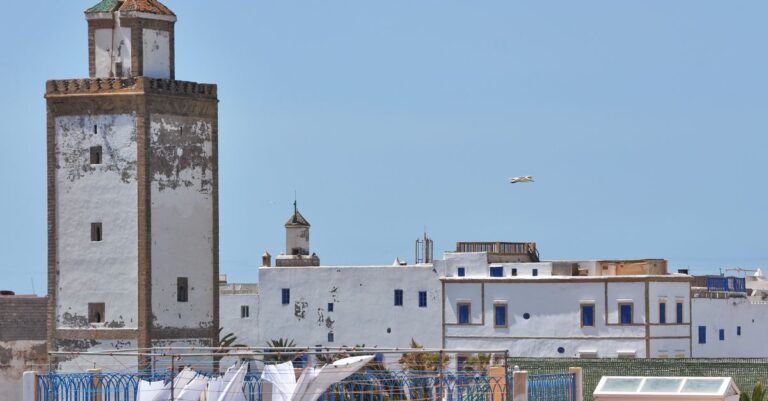
Dedicate your final day to Fes el Bali. Visit the Chouara Tannery, where leather has been dyed by hand for centuries, the Al Quaraouiyine complex, regarded as one of the oldest continuously operating universities in the world, and the ornately carved Bou Inania Madrasa. Shop for leather goods and hand-painted ceramics, a craft Fes shares with the town of Safi.
Suggested activities: Chouara Tannery viewpoint, Bou Inania Madrasa, Bab Boujeloud (the blue gate), pottery and leather shopping.
Food: a farewell dinner of slow-cooked lamb tagine with a glass of fresh orange juice.
Accommodation: same riad as Day 6, or an evening departure.
Practical tip: if you are flying home from Marrakech or Casablanca instead of Fes, book an ONCF train in advance for a comfortable onward journey.
How to Modify This Itinerary for Families
Long mountain drives can be tough on younger kids, so consider breaking Day 4’s long stretch into two shorter driving days, or booking a private vehicle with more frequent stops. Choose a family-friendly desert camp with private tents and bathrooms rather than a shared basic camp, and build in downtime at the riad pool in Marrakech and Fes. A short domestic flight between Ouarzazate and Fes (via Casablanca) is also worth considering if you want to cut total driving time significantly.
How to Modify This Itinerary for Couples
Upgrade to a luxury desert camp with a private tent, en-suite bathroom, and a dedicated dinner setup away from larger groups. Add a hot air balloon ride over the Marrakech countryside on Day 2, and request a riad with a rooftop plunge pool or private terrace for both your Marrakech and Fes stays. A private driver-guide for the full week, rather than a shared tour, also makes it easier to linger at viewpoints along the Tizi n’Tichka Pass and the Dades Valley.
Budget vs Luxury Options
On a budget (roughly $40 to $70 per day), expect shared small-group desert tours, simple guesthouses, and standard shared-bathroom desert camps. A mid-range trip ($100 to $180 per day) typically includes a private driver, comfortable 3 to 4-star riads, and a desert camp with private tents. A luxury version ($250 or more per day) adds boutique riads with pools, a private guide for the full week, and a premium desert camp with private bathrooms, air conditioning, and a la carte dining.
Transportation Options
The Marrakech-Ait Ben Haddou-Merzouga-Fes loop is not covered by rail, so most travelers use a private driver-guide or a small-group tour for Days 3 to 6, both widely available and generally good value. Self-drive rental cars are an option for confident drivers comfortable with mountain roads, but are not recommended for a first visit to the Tizi n’Tichka Pass at night. If you skip the desert route or arrive back in Marrakech, ONCF, Morocco’s national railway, runs comfortable trains between Marrakech, Casablanca, Rabat, and Fes.
Best Time to Follow This Itinerary
Spring (March to May) and autumn (September to November) are the best seasons for this route, with comfortable daytime temperatures in Marrakech, the Atlas Mountains, and the desert. Summer (June to August) can push past 40°C (104°F) in the Sahara, making the camel trek and dune walks uncomfortable at midday. Winter (December to February) is pleasant during the day but cold at night in the desert and mountains, and occasional snow can briefly close the Tizi n’Tichka Pass.
What to Pack
- Layers for large temperature swings between day and night in the desert and mountains
- A lightweight scarf or shesh to protect against blowing sand
- Comfortable, closed-toe walking shoes for medinas and dune walks
- Sunscreen, sunglasses, and a refillable water bottle
- A warm jacket for the Tizi n’Tichka Pass and desert nights, even in summer
- Cash in Moroccan dirhams for small towns and rural stops
- A power bank, charging options are limited at desert camps
- Modest clothing covering shoulders and knees for towns and religious sites
Common Mistakes to Avoid
- Booking the desert camp or driver at the last minute during peak season (March to May, September to November)
- Underestimating drive times between Marrakech, Merzouga, and Fes
- Wearing sandals or open shoes for the dune trek at Erg Chebbi
- Assuming ATMs and card machines are available in small Atlas and desert towns
- Skipping the Ifrane and Azrou stop on the drive to Fes, an easy and scenic break
- Rushing the Fes medina without a local guide, it is easy to get disoriented in Fes el Bali
- Overpacking for a trip that involves narrow medina alleys and multiple hotel changes
Final Thoughts on Your Morocco Travel Itinerary 7 Days
This Morocco travel itinerary 7 days route packs in the country’s biggest highlights, imperial cities, a mountain pass, a UNESCO kasbah, and a night under the stars in the Sahara, without feeling rushed if you follow the pacing above. For a broader primer before you go, see our full Morocco travel guide for first-time visitors, and check your entry requirements with our Morocco tourist e-visa guide before you book.
Frequently Asked Questions
Is 7 days enough for Morocco?
Yes, 7 days is enough to see Marrakech, cross the High Atlas, spend a night in the Sahara Desert, and explore Fes, as long as you accept two or three longer driving days along the way.
Can I do this itinerary without a car?
Yes. Most travelers book a private driver-guide or join a small-group tour for the Marrakech to Fes desert loop, since public transport does not directly serve Ait Ben Haddou or Merzouga.
Is Ait Ben Haddou worth visiting?
Yes. This UNESCO-listed fortified village is one of Morocco’s most photographed sites and a natural, scenic stop on the road between Marrakech and the Sahara Desert.
How cold is the Sahara Desert at night?
Desert nights can drop significantly below daytime temperatures, even in summer, and can approach freezing in winter, so pack warm layers regardless of when you travel.
Can I end the itinerary in Fes and fly out from there?
Yes. Fes-Saiss Airport has regional and international connections, or you can take an ONCF train from Fes back to Casablanca for a wider range of international flights.