The Timeless Art of Pottery in Safi and Fez
Morocco is a country where history, craftsmanship, and culture come together in extraordinary ways. Among its many artistic traditions, pottery stands as one of the oldest and most celebrated forms of expression. From beautifully hand-painted plates to intricate mosaic tiles and elegant tagines, Moroccan pottery reflects centuries of knowledge passed from one generation to the next.
Two cities have become synonymous with this remarkable craft: Safi, Morocco’s pottery capital on the Atlantic coast, and Fez, the country’s spiritual and cultural heart. While each city has developed its own distinctive style, both continue to preserve techniques that have remained largely unchanged for hundreds of years.
Whether you’re a traveler searching for authentic souvenirs, a lover of traditional art, or simply curious about Moroccan culture, exploring the pottery workshops of Safi and Fez offers a fascinating glimpse into one of the country’s most enduring traditions.
A Craft Rooted in History
Pottery has been part of Moroccan life for more than a thousand years. Influenced by Amazigh (Berber), Arab, Andalusian, and Mediterranean civilizations, Moroccan ceramics have evolved into a unique artistic language recognized around the world.
Historically, pottery was not created merely for decoration. Families depended on clay vessels for cooking, storing water, preserving olive oil, and serving meals. Over time, practical objects gradually became works of art as artisans introduced colorful glazes, geometric patterns, and delicate hand-painted designs inspired by Islamic architecture and nature.
Today, these traditions continue to thrive in workshops where master craftsmen teach apprentices exactly as their own teachers once taught them.
Why Safi Is Known as Morocco’s Pottery Capital
Located along Morocco’s Atlantic coastline, Safi has earned an international reputation as the country’s ceramic capital.
The region is blessed with exceptionally high-quality clay, making it an ideal place for pottery production. For centuries, local artisans have transformed this natural resource into stunning bowls, decorative plates, tagines, lanterns, and ornamental pieces exported throughout the world.
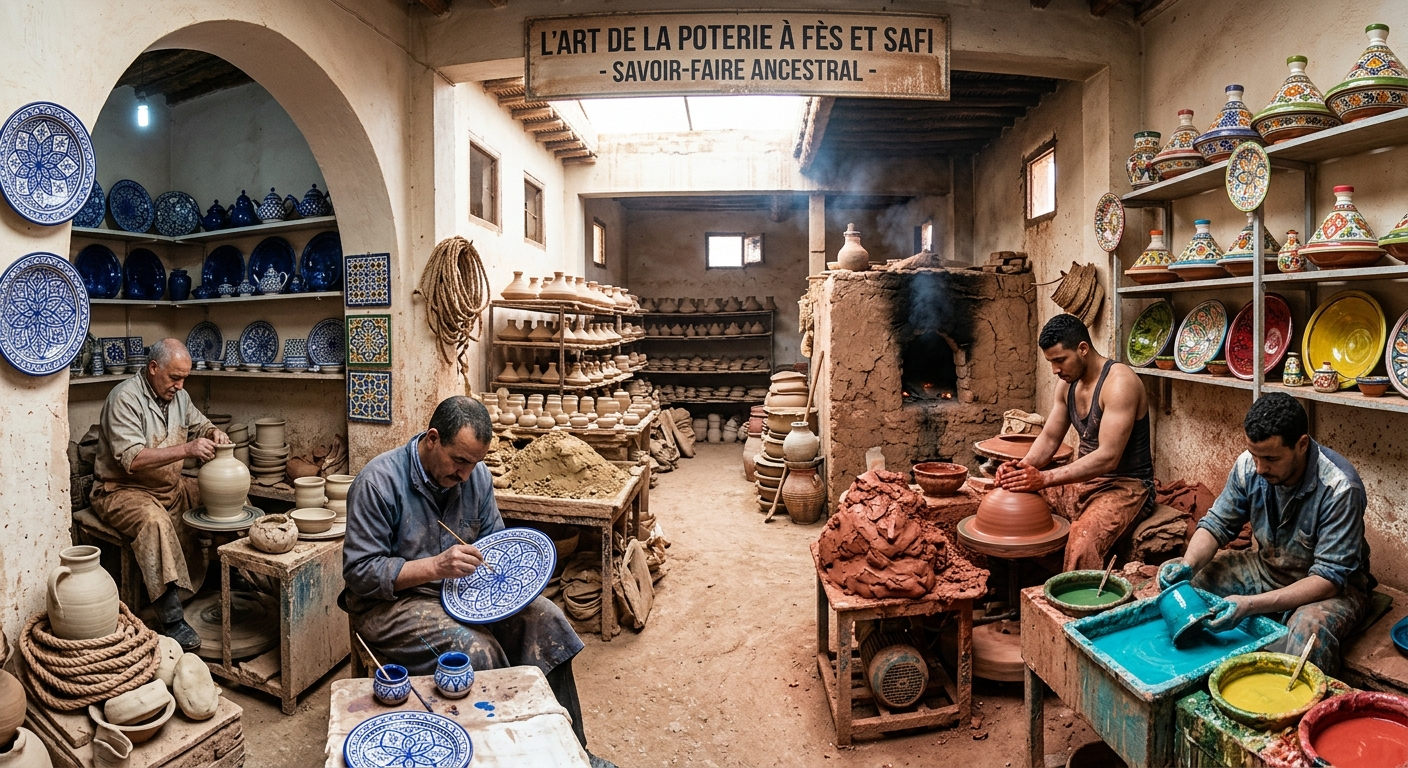
Walking through Safi’s pottery quarter is an unforgettable experience. Every street is lined with workshops where visitors can watch skilled artisans shaping wet clay with incredible precision.
The sound of spinning wheels, crackling kilns, and hand-painted brushes creates an atmosphere that feels almost timeless.
Unlike factory-made ceramics, every piece produced here is unique.
The Traditional Pottery-Making Process
Creating a single ceramic masterpiece requires patience, precision, and years of experience.
1. Collecting the Clay
Everything begins with natural clay extracted from nearby quarries. The clay is carefully cleaned, filtered, and mixed with water until it reaches the perfect consistency.
This preparation can take several days before the material is ready to use.
2. Shaping the Pottery
Using either a traditional foot-powered wheel or modern spinning wheels, artisans carefully shape the clay by hand.
Watching an experienced potter work is mesmerizing. Within minutes, a simple lump of clay transforms into a perfectly balanced vase, bowl, or tagine.
Years of practice allow craftsmen to control every movement with astonishing precision.
3. Drying Naturally
Fresh pottery cannot be fired immediately.
Each piece must dry slowly for several days to prevent cracking. Depending on weather conditions, drying may take anywhere from two days to over a week.
4. First Firing
Once dry, the pottery is placed inside large kilns heated to temperatures exceeding 900°C (1,650°F).
This first firing hardens the clay while preparing it for glazing and decoration.
5. Hand Painting
This is where Moroccan pottery truly comes to life.
Using delicate brushes, artisans paint every design entirely by hand.
Popular motifs include:
- Eight-pointed stars
- Floral arabesques
- Geometric mosaics
- Calligraphic elements
- Traditional Moroccan patterns
- Nature-inspired designs
No machines are involved.
Even two pieces with identical patterns will contain subtle differences that make each one one-of-a-kind.
6. Glazing and Final Firing
After painting, pottery receives a transparent glaze that gives it its brilliant shine.
The pieces are fired once again at high temperatures, permanently sealing the colors beneath the glossy surface.
Only after this final stage is the pottery ready for sale.
Fez: The Home of Elegant Blue Ceramics
While Safi is famous for colorful pottery, Fez has become legendary for its refined blue-and-white ceramics.
The city’s pottery tradition dates back centuries and is deeply connected to the artistic heritage of the ancient Medina.
Fez artisans specialize in elegant geometric designs inspired by Islamic architecture.
The famous cobalt blue pigment has become one of the city’s defining characteristics.
Walking through the pottery workshops of Fez feels like stepping into a living museum where centuries-old techniques remain part of everyday life.
The Famous Zellige Tradition
Pottery in Fez extends far beyond plates and bowls.
The city is also renowned for producing Zellige, Morocco’s iconic handcrafted mosaic tiles.
Each tile is individually cut by hand using small chisels before being assembled into breathtaking geometric patterns.
These mosaics decorate:
- Mosques
- Riads
- Palaces
- Fountains
- Luxury hotels
- Courtyards
- Traditional homes
Some complex designs require thousands of individual tiles carefully fitted together like an enormous puzzle.
Meeting Morocco’s Master Artisans
One of the greatest experiences when visiting Safi or Fez is meeting the craftsmen themselves.
Many workshops are family businesses that have operated for generations.
Children often begin learning basic techniques from parents and grandparents before gradually mastering every stage of production.
For these artisans, pottery is more than a profession.
It represents family heritage, cultural identity, and artistic passion.
Visitors are usually welcomed warmly and can observe every step of the creative process.
Many workshops even allow guests to try shaping clay on the pottery wheel.
Why Handmade Pottery Is Worth Buying
Authentic Moroccan pottery is more than a beautiful souvenir.
Every purchase supports local artisans and helps preserve centuries-old traditions.
Unlike mass-produced ceramics, handmade pottery offers:
- Exceptional craftsmanship
- Unique designs
- Durable quality
- Cultural authenticity
- Sustainable production
- Artistic value
Whether you choose a colorful serving dish, an elegant vase, or a traditional tagine, you’re taking home a genuine piece of Moroccan heritage.
Tips for Buying Authentic Moroccan Pottery
When shopping for pottery in Safi or Fez, keep these tips in mind:
- Buy directly from artisan workshops whenever possible.
- Look for slight variations that indicate handmade craftsmanship.
- Ask artisans about the production process.
- Inspect the glaze for a smooth, even finish.
- Wrap fragile items carefully for travel.
- Consider shipping larger pieces internationally if available.
Pottery as a Living Tradition
Despite modern manufacturing and changing lifestyles, pottery remains an essential part of Moroccan culture.
Families still cook traditional dishes in clay tagines, decorate homes with handcrafted ceramics, and celebrate important occasions using beautifully painted serving ware.
Young artisans continue learning from experienced masters, ensuring that this remarkable tradition survives for future generations.
Government initiatives, artisan cooperatives, and cultural festivals have also helped promote Moroccan ceramics internationally, introducing this timeless art to collectors and travelers from around the world.
Final Thoughts
The pottery traditions of Safi and Fez represent far more than artistic skill—they tell the story of Morocco’s history, creativity, and enduring cultural identity. From the rich clay shaped by hand to the intricate patterns painted with remarkable precision, every piece reflects generations of dedication and craftsmanship.
Visiting these two cities offers an unforgettable opportunity to witness living traditions that continue to inspire people around the world. Whether you’re watching a master potter at work, exploring colorful workshops, or bringing home a handcrafted ceramic, you’ll gain a deeper appreciation for one of Morocco’s most treasured art forms.
If you want to experience the true soul of Moroccan craftsmanship, few experiences compare to discovering the timeless art of pottery in Safi and Fez.